704-BLOSSOM
We Do Not Handle Chapter 13 Bankruptcy Matters
Pursuing Bankruptcy for Medical Debt
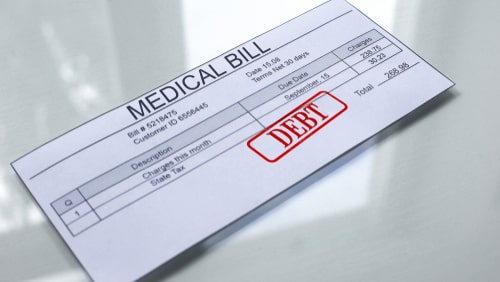
Medical debt is generally dischargeable in bankruptcy, which means it can often be wiped out entirely. Federal law typically treats it as unsecured debt, the same category as credit cards, with no special protection for hospitals or collection agencies. There is also no minimum amount you need to owe before filing makes sense. What matters is your overall financial picture, because bankruptcy eliminates qualifying debts rather than just the medical bills.
If you are considering bankruptcy for medical debt in 2026, a Mecklenburg County bankruptcy lawyer can tell you whether filing fits your situation.
Can Chapter 7 Bankruptcy Eliminate Medical Debt?
Chapter 7 bankruptcy can discharge qualifying medical debt without requiring a repayment plan. This can include hospital bills, doctor and specialist charges, ambulance fees, lab and imaging costs, and other medical expenses. Debt that has been sold to a collection agency can also still be discharged.
Under 11 U.S.C. § 727, a Chapter 7 discharge releases you from personal liability for qualifying pre-filing debts. Eligibility depends in part on the means test and other Chapter 7 requirements. Once qualifying medical debt is discharged, creditors can no longer try to collect it from you.
Will You Lose Your House or Car if You File Bankruptcy?
Many people who file bankruptcy in North Carolina keep everything they own. The state has its own exemption statutes that protect specific property from creditors, and North Carolina requires filers to use those rather than the federal list.
Those exemptions cover equity in your home, a motor vehicle, household goods and furnishings, tools used in your trade, and retirement accounts. Many retirement funds in particular are protected in bankruptcy, which is why cashing out a 401(k) to pay medical bills before filing is usually a serious mistake.
The protected amounts are set by statute and adjusted over time, so what fits within them depends on your equity, not on the total value of what you own. A car worth $18,000 with $14,000 still owed on it carries only $4,000 in equity.
What Happens to Medical Debt Collection When You File Bankruptcy?
Filing bankruptcy immediately triggers an automatic stay, which is a legal order that temporarily stops most creditors from trying to collect debts from you. It takes effect as soon as the case is filed and can provide immediate relief from collection pressure.
This stay can stop all of the following:
- Collection calls and letters
- Lawsuits over medical bills
- Wage garnishments
- Bank account levies
- Other efforts to collect qualifying debts
You do not need a separate court hearing for the stay to take effect. Creditors who keep collecting after receiving notice of the bankruptcy can face court penalties.
Can You Still Get Medical Care After Filing Bankruptcy to Clear Medical Debt?
Bankruptcy does not affect your insurance coverage, your Medicare or Medicaid eligibility, or your ability to receive emergency medical care. If you plan to keep seeing a particular doctor or hospital, discuss that with your attorney before filing. A provider listed in your bankruptcy may decline to see you for future non-emergency visits. In some circumstances, there are ways to address that.
Bankruptcy also does not discharge debts incurred after you file. Treatment you receive going forward remains your responsibility. Timing a filing after a major course of treatment concludes sometimes produces a better result than filing in the middle of it.
What Should You Do Before Filing for Bankruptcy?
Before filing Chapter 7 for medical debt, avoid moving assets or adding new charges outside treatment. Large recent credit card purchases can create problems. Transfers to family members or sales below market value can be challenged by the trustee.
Do not cash out protected retirement funds just to pay medical bills that may be dischargeable. Instead, gather your tax returns, pay stubs, bank statements, creditor information, and medical bills so your attorney can evaluate the case accurately.
Contact Our Charlotte, NC Medical Debt Attorney Today
Attorney Rashad Blossom brings practical experience to these cases. Before practicing law, he owned a barber shop, giving him firsthand insight into the financial pressure individuals and small business owners can face. He gives clients straightforward guidance about what bankruptcy can and cannot fix.
Contact Blossom Law PLLC at 704-256-7766 to talk to our Mecklenburg County bankruptcy lawyer today.


From our office in Charlotte, we serve clients throughout Mecklenburg County, Union County, and Gaston County, including Concord, Gastonia, Huntersville, Belmont, Davidson, Cornelius, Harrisburg, Matthews, Monroe, Fairview, Stanley, and Bessemer City, as well as other communities across North Carolina.
126 N McDowell St 2nd Floor, Charlotte, NC 28204
704-256-7766